
SRT is designed to make live video transmission over unpredictable networks more reliable. It can compensate for packet loss, network fluctuations and other issues that commonly occur when transmitting video over the public internet.
But what happens when the connection itself goes down?
This is where SRT Dual Streaming comes in.
Also known as SRT Bonding, the technology uses two network connections to add another layer of redundancy to an SRT transmission. At 2wcom, we call it SRT Dual Streaming because it follows the same principle already used for RTP Dual Streaming across our solutions.
When Packet Recovery Is Not Enough
One of SRT’s key mechanisms for reliable transmission is packet recovery. If a packet does not reach the receiver, the missing packet can be detected and requested again.
This works well for packet loss. But there is one limitation: if the entire network connection is interrupted, there is no path left to retransmit the missing data.
For broadcast applications, even a short interruption can be a problem.
With RTP, this can already be addressed through Dual Streaming, using two independent paths to protect a stream against the failure of one connection.
With SRT Dual Streaming, this additional level of redundancy is now also available for SRT streams on 2wcom devices.
Two Connections. One Reliable Stream.
SRT Dual Streaming uses a second network connection as an additional transmission path.
If the primary connection fails, transmission can continue via the second path without interrupting the stream. Instead of relying on a single network connection, the SRT stream can therefore remain available even when one path goes down.
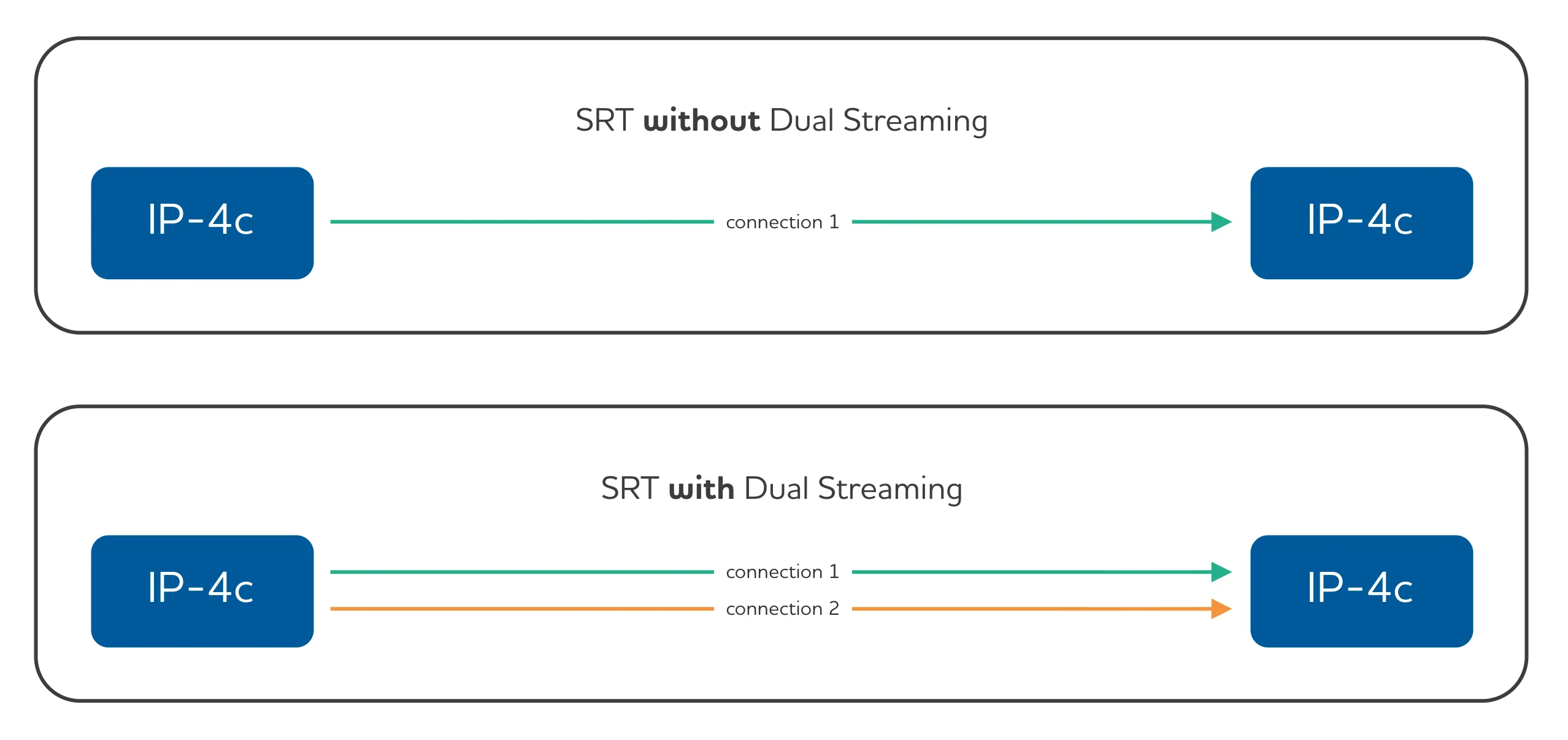
This adds another layer of protection to SRT. While SRT itself handles problems such as individual lost packets, SRT Dual Streaming protects the transmission against the loss of an entire connection.
Choose How You Use the Second Connection
Depending on the application, the second connection can be used in two different ways.
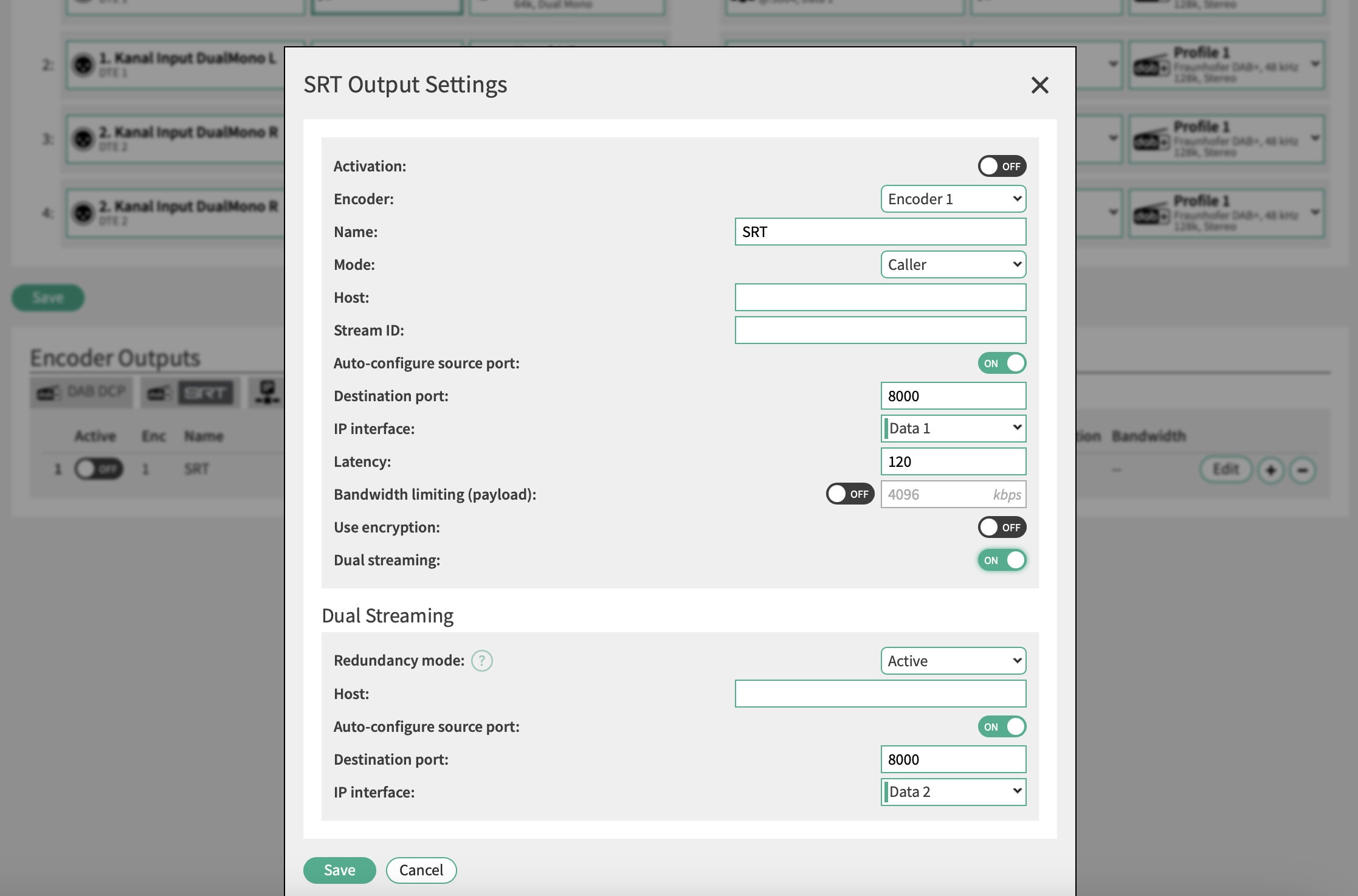
With Redundancy Mode active, the same stream is transmitted continuously over both connections. Both paths are available at the same time, providing maximum redundancy if one of them fails.
With Redundancy Mode inactive, the second connection acts as a backup. The stream is transmitted via the primary connection during normal operation, while the second path takes over if the first connection fails.
This reduces the resources required on the second connection while still providing failover when it is needed.
SRT Dual Streaming Across 2wcom Devices
SRT Dual Streaming is now available for all 2wcom devices supporting SRT.
There is no separate feature or additional license required. If SRT is enabled on the device, SRT Dual Streaming is included by default.
For existing SRT workflows, this means more resilience without introducing another transport protocol or changing the fundamental workflow.
One stream. Two paths. And one less single point of failure.